Black Peony Poppies
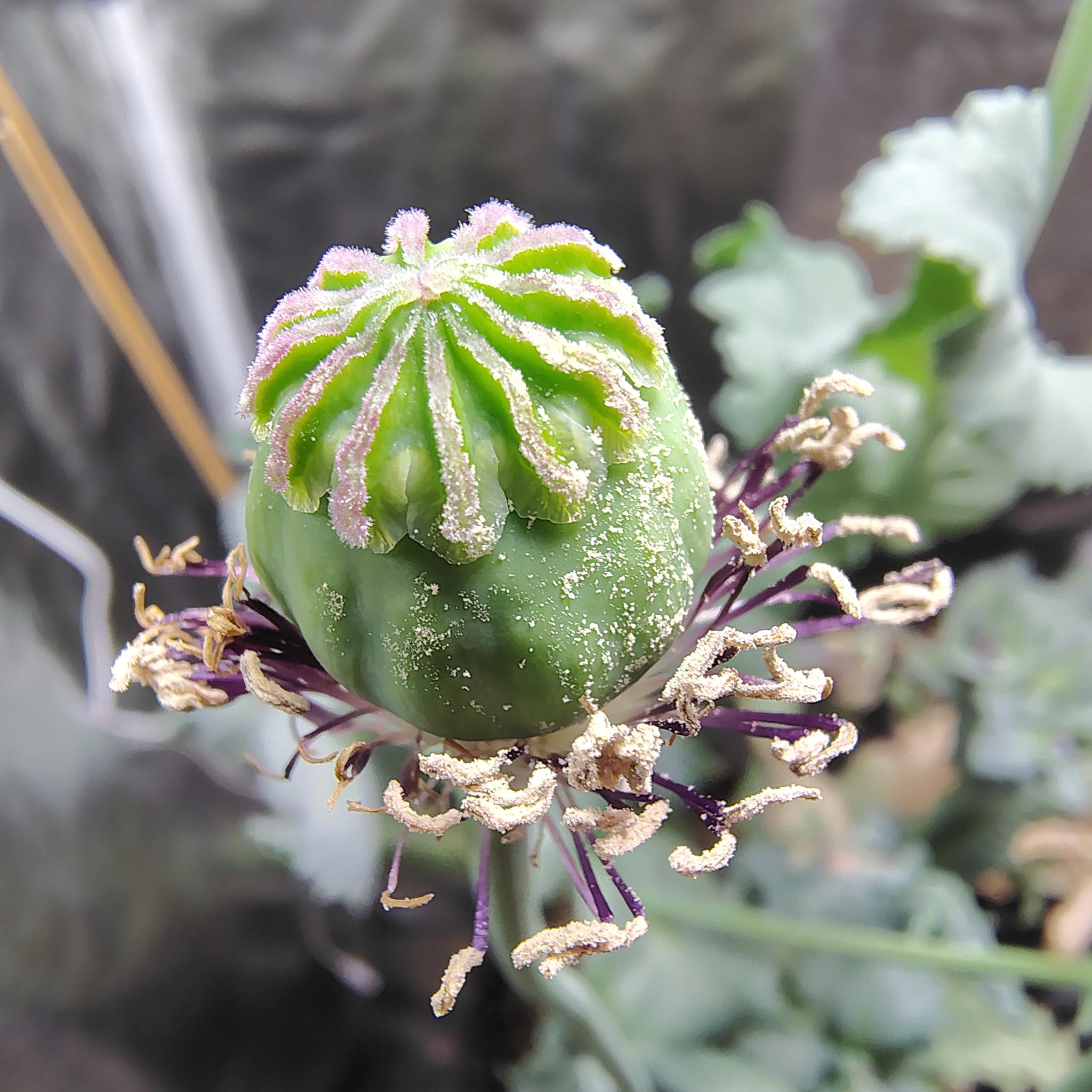
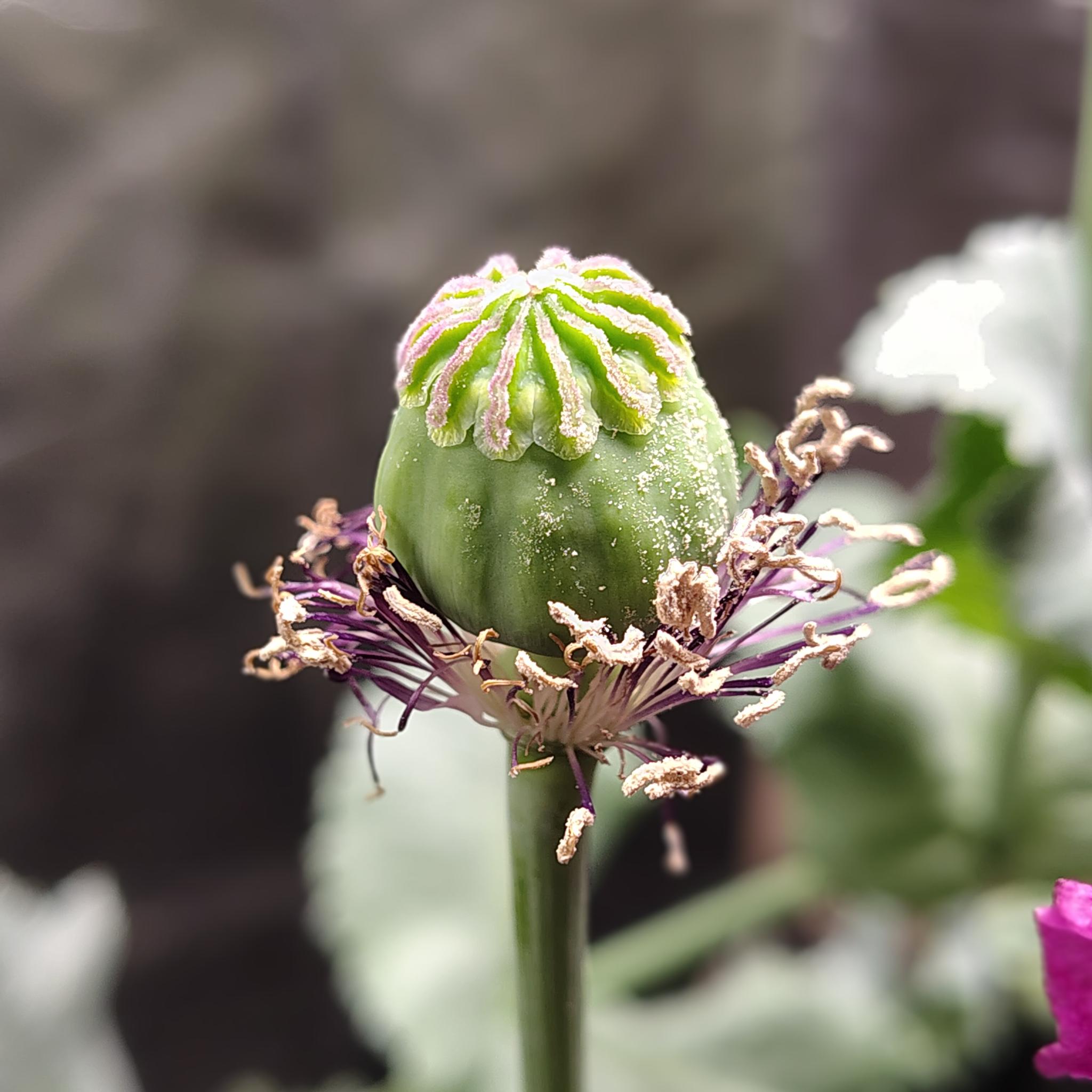
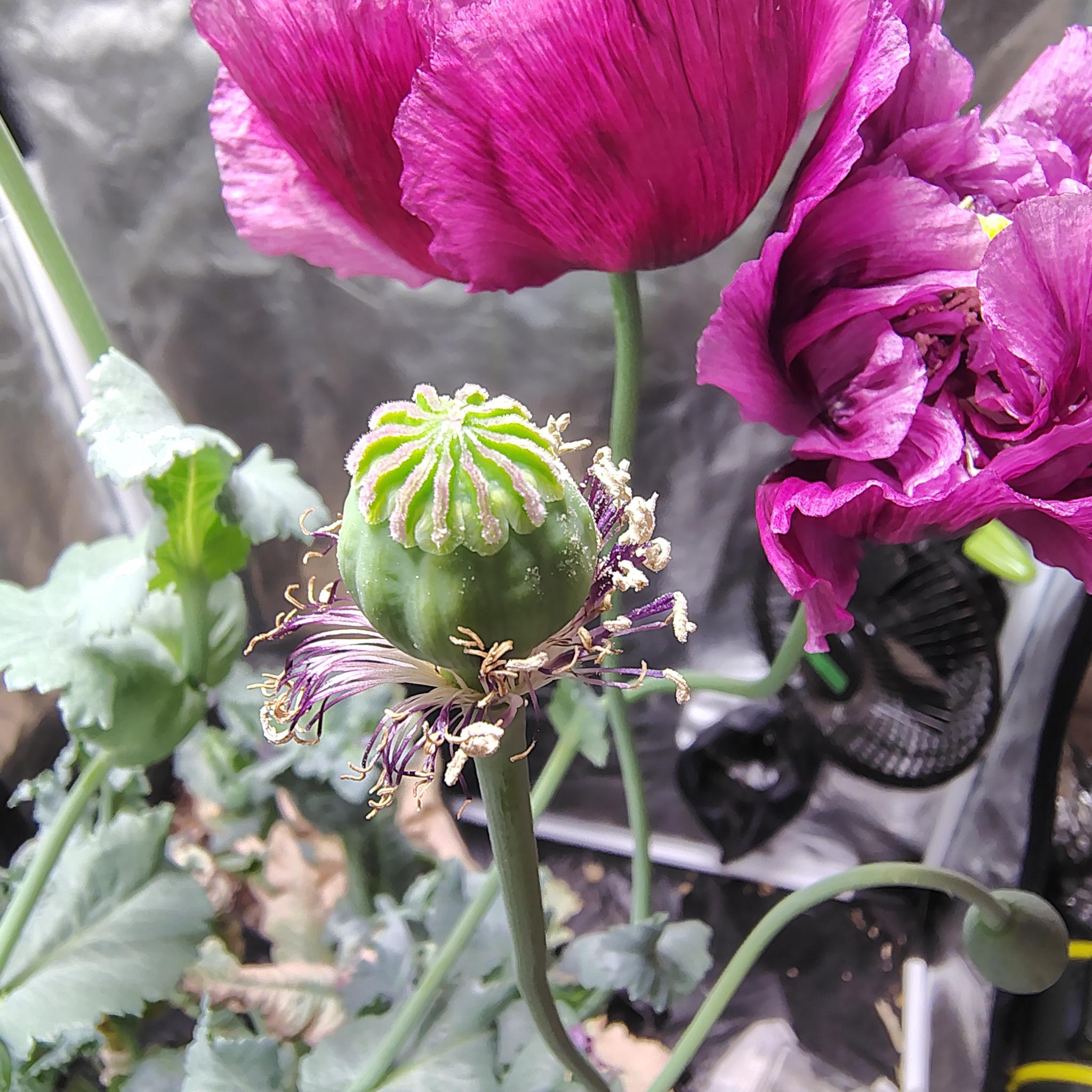
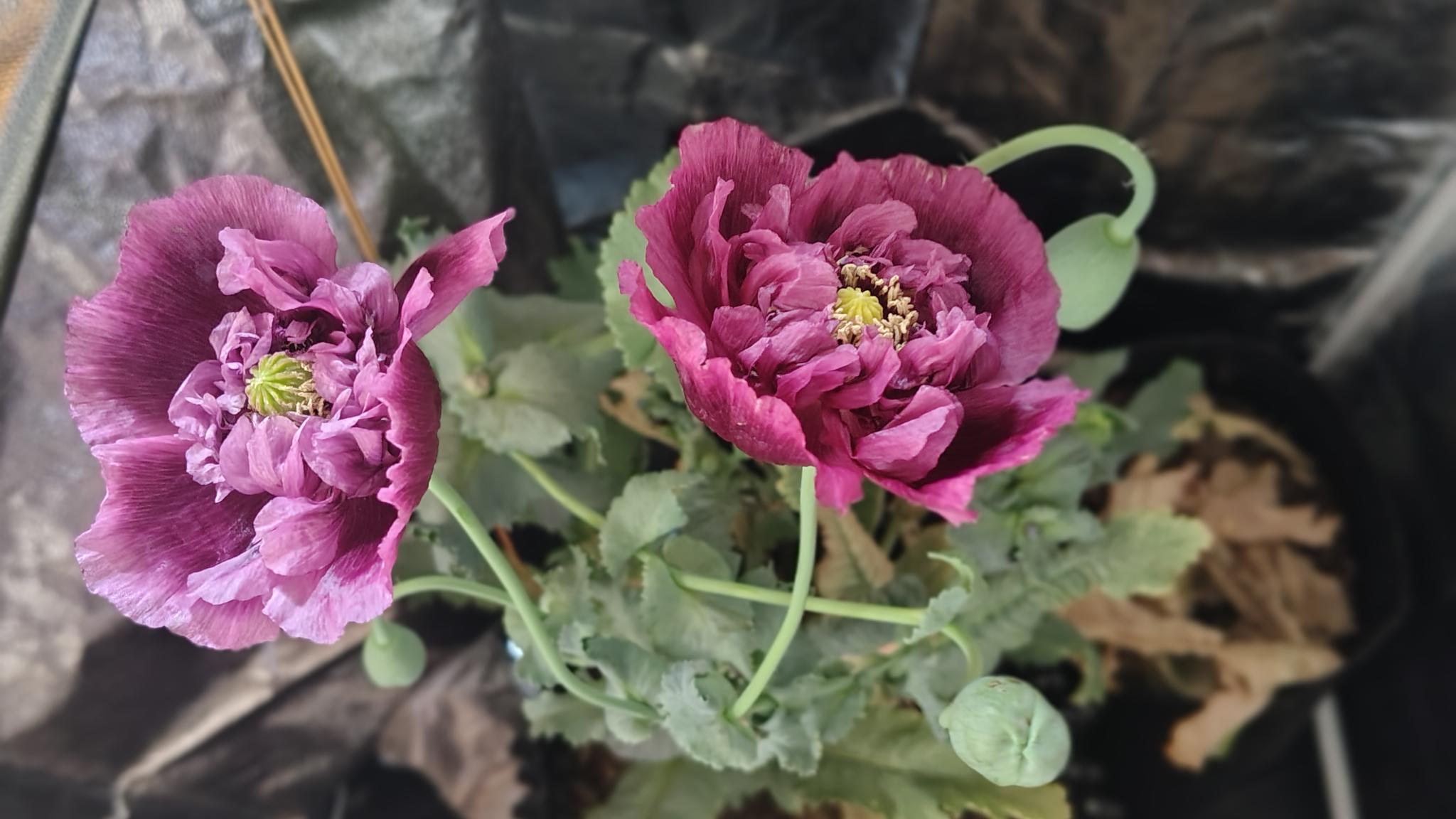
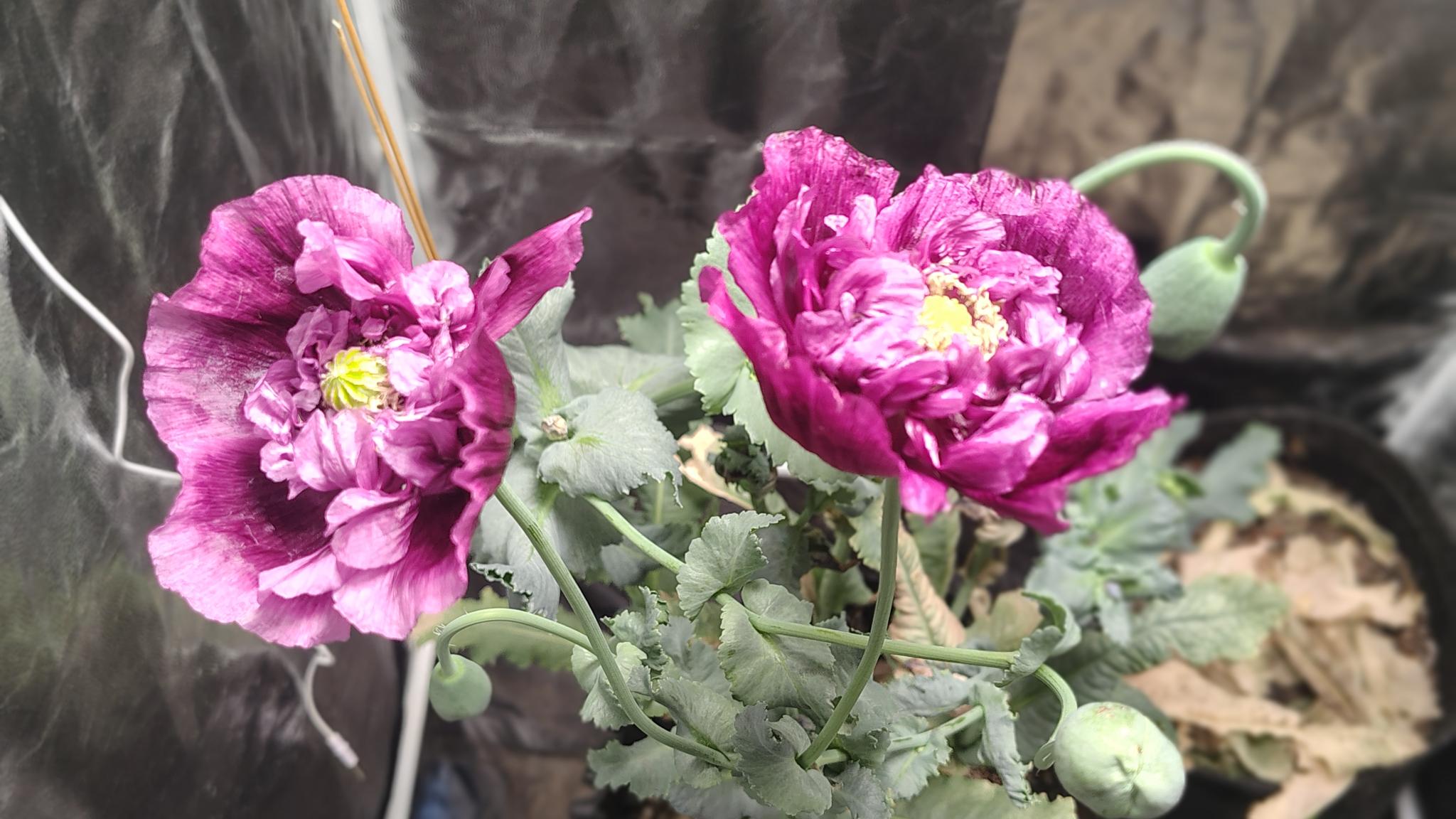
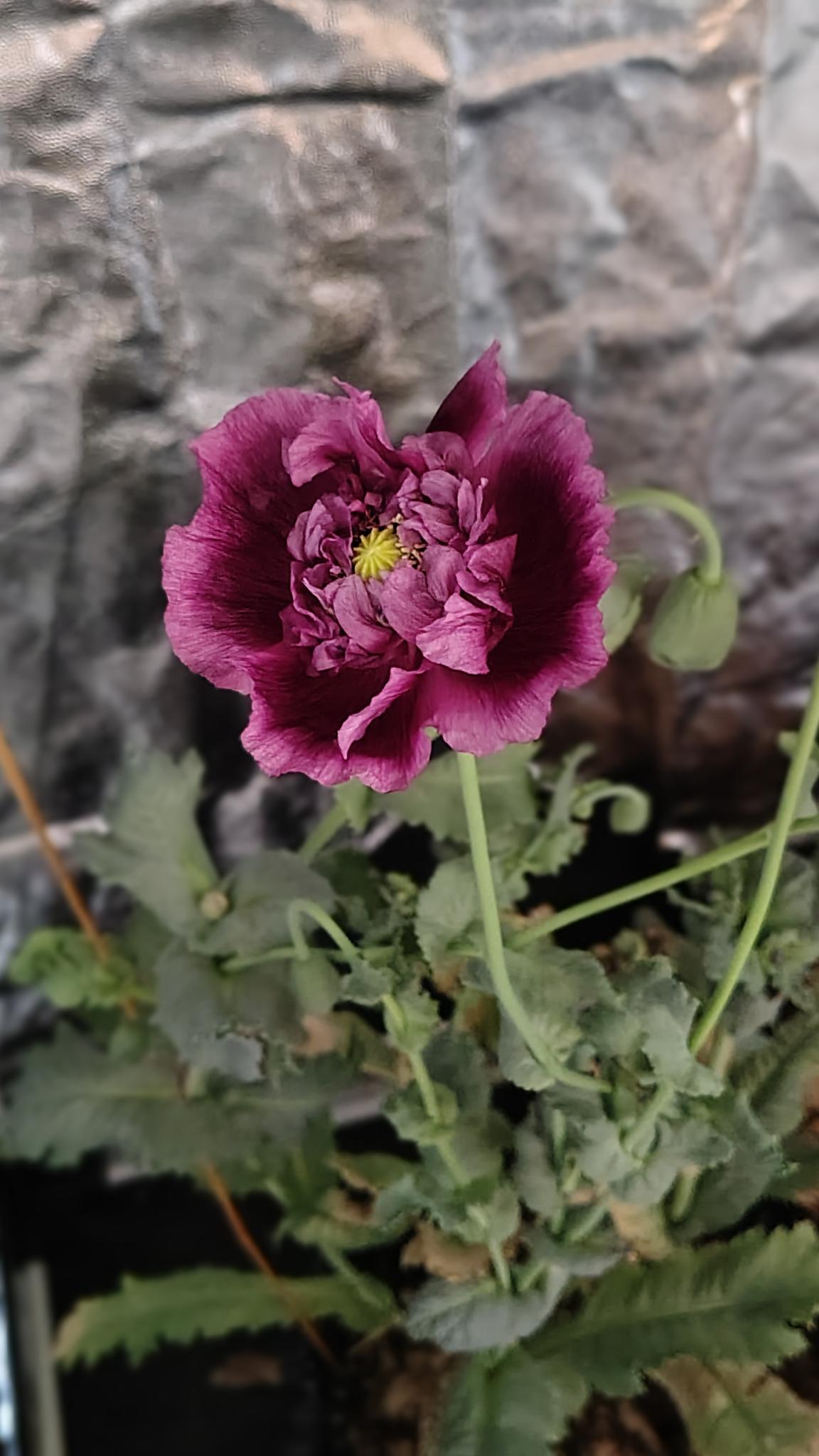
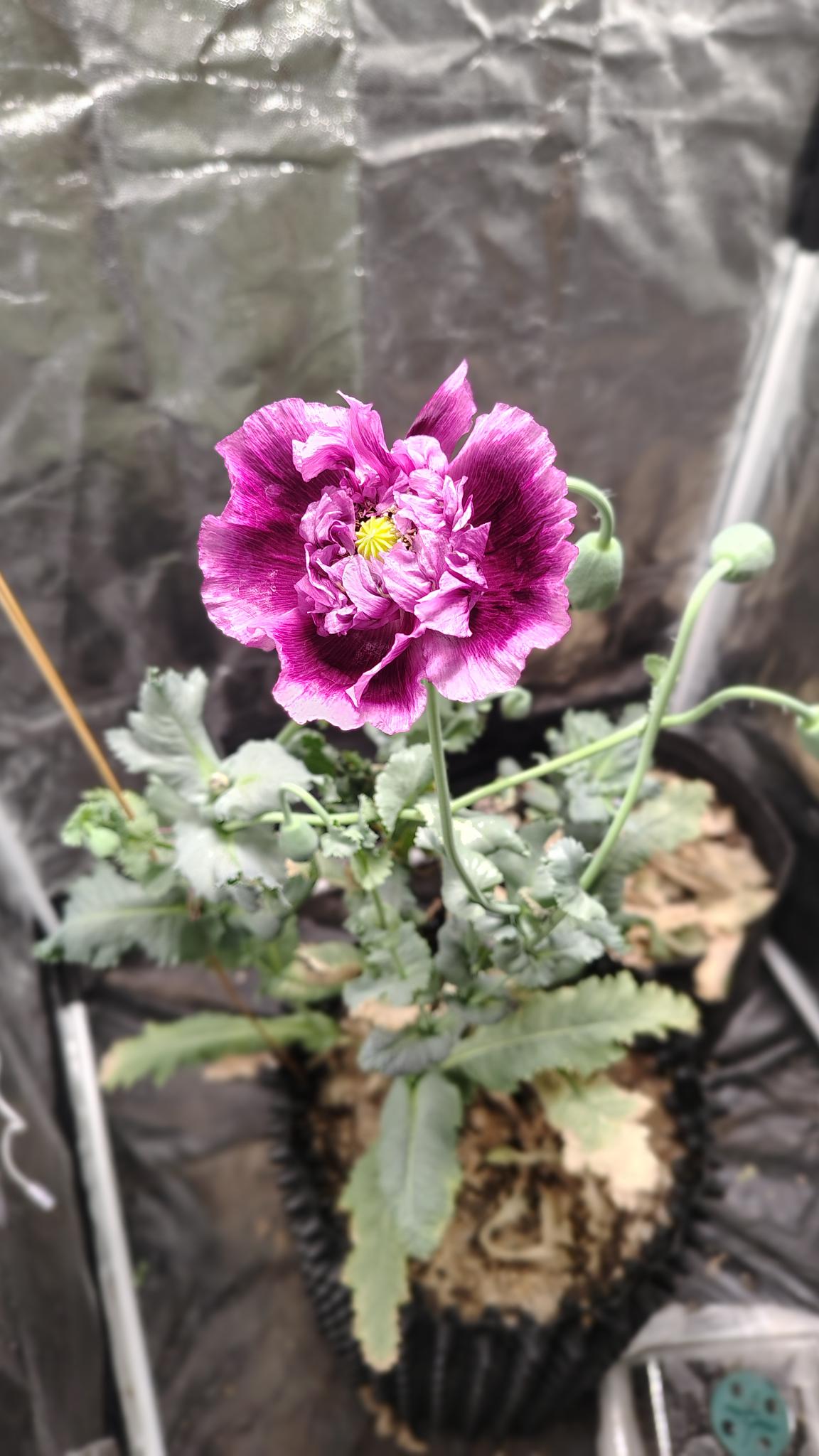
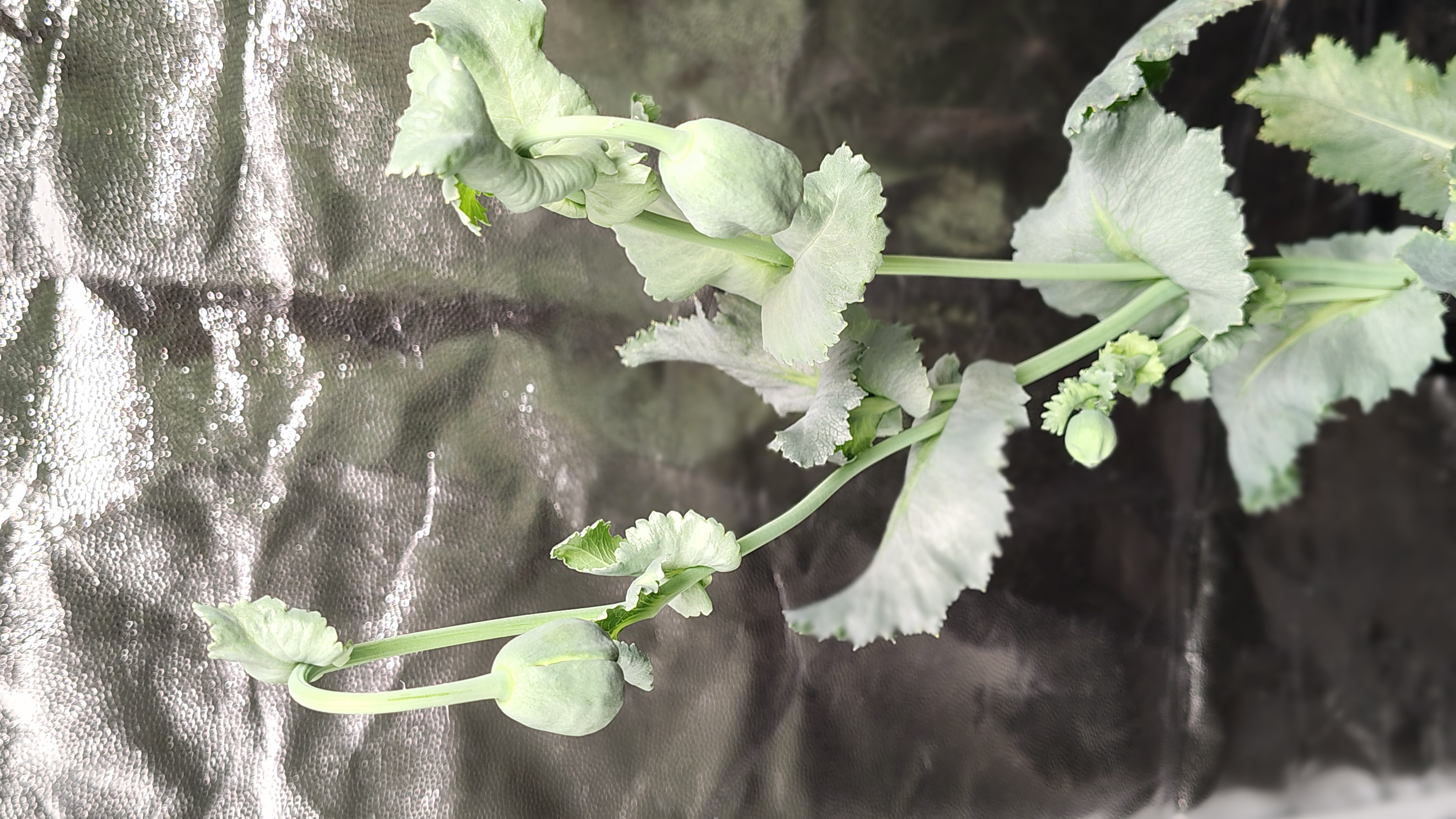
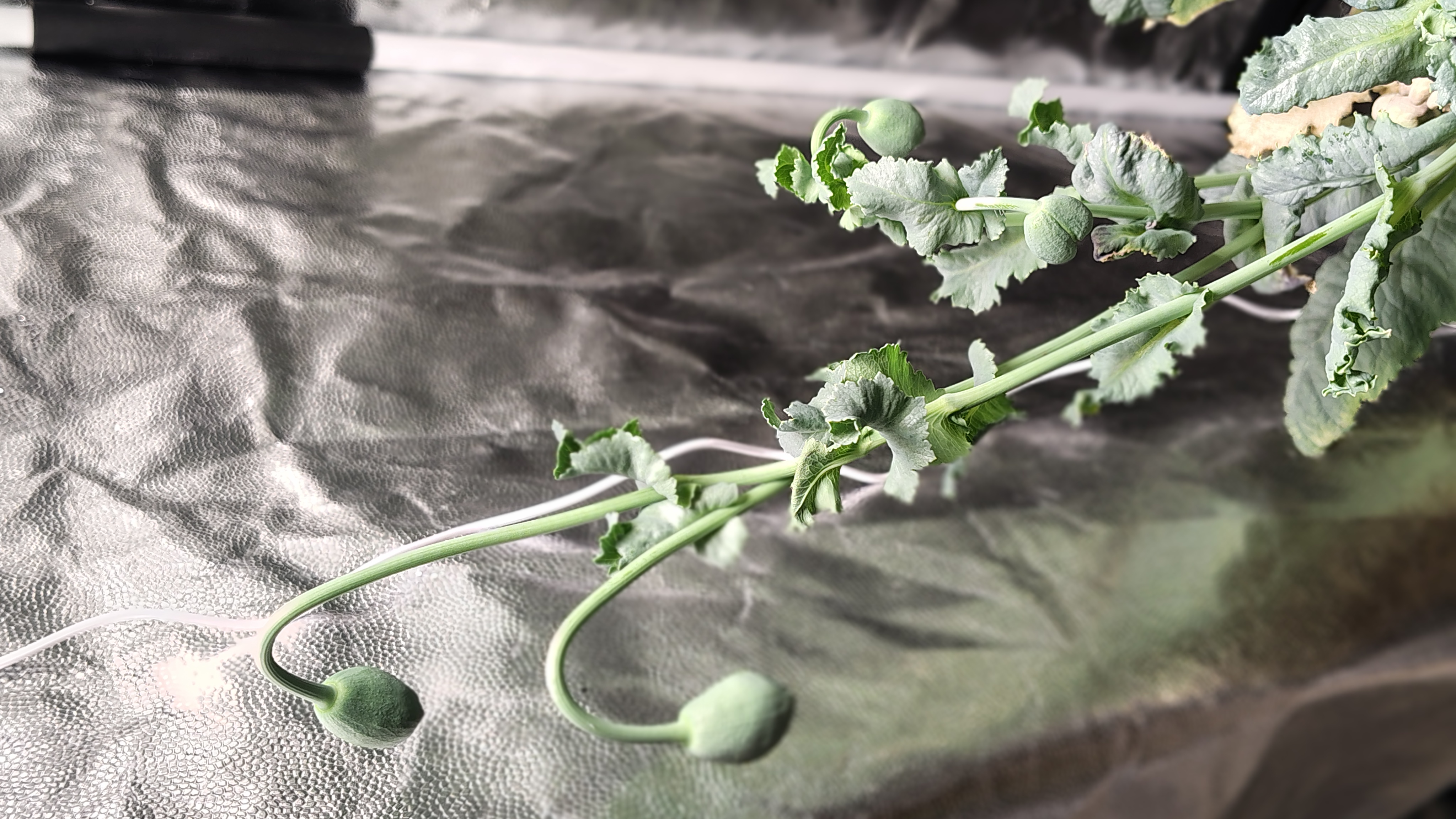
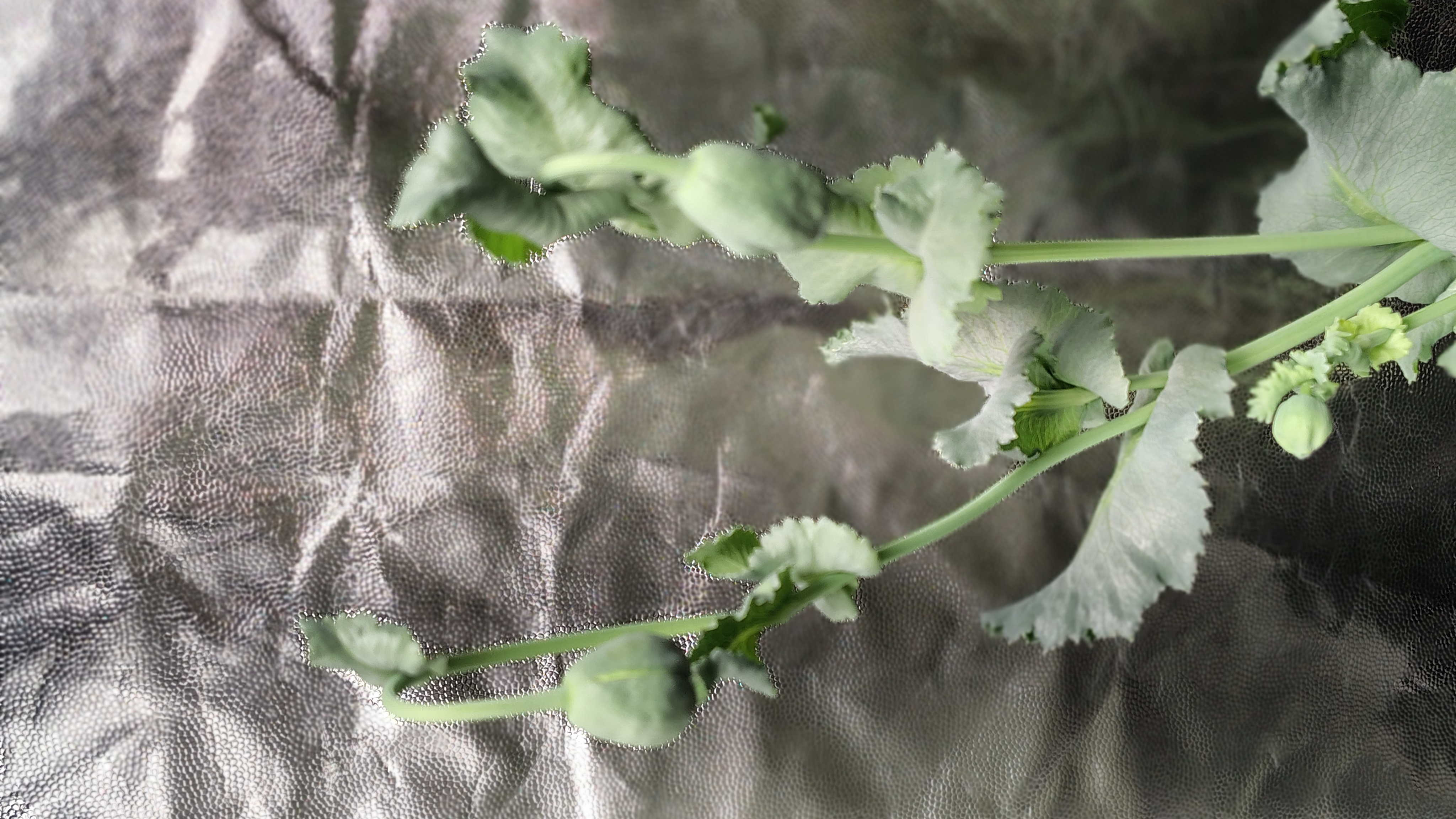
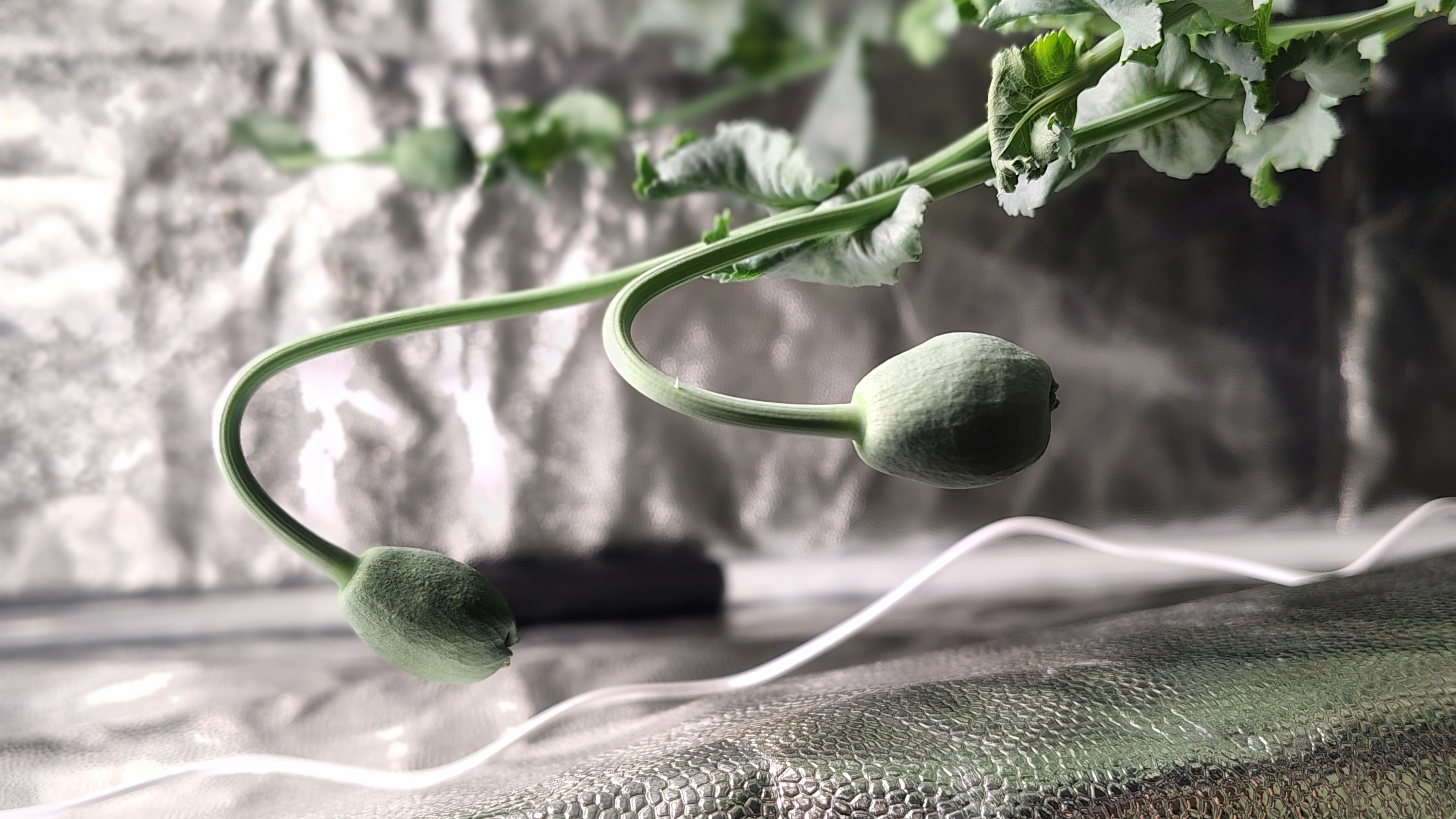
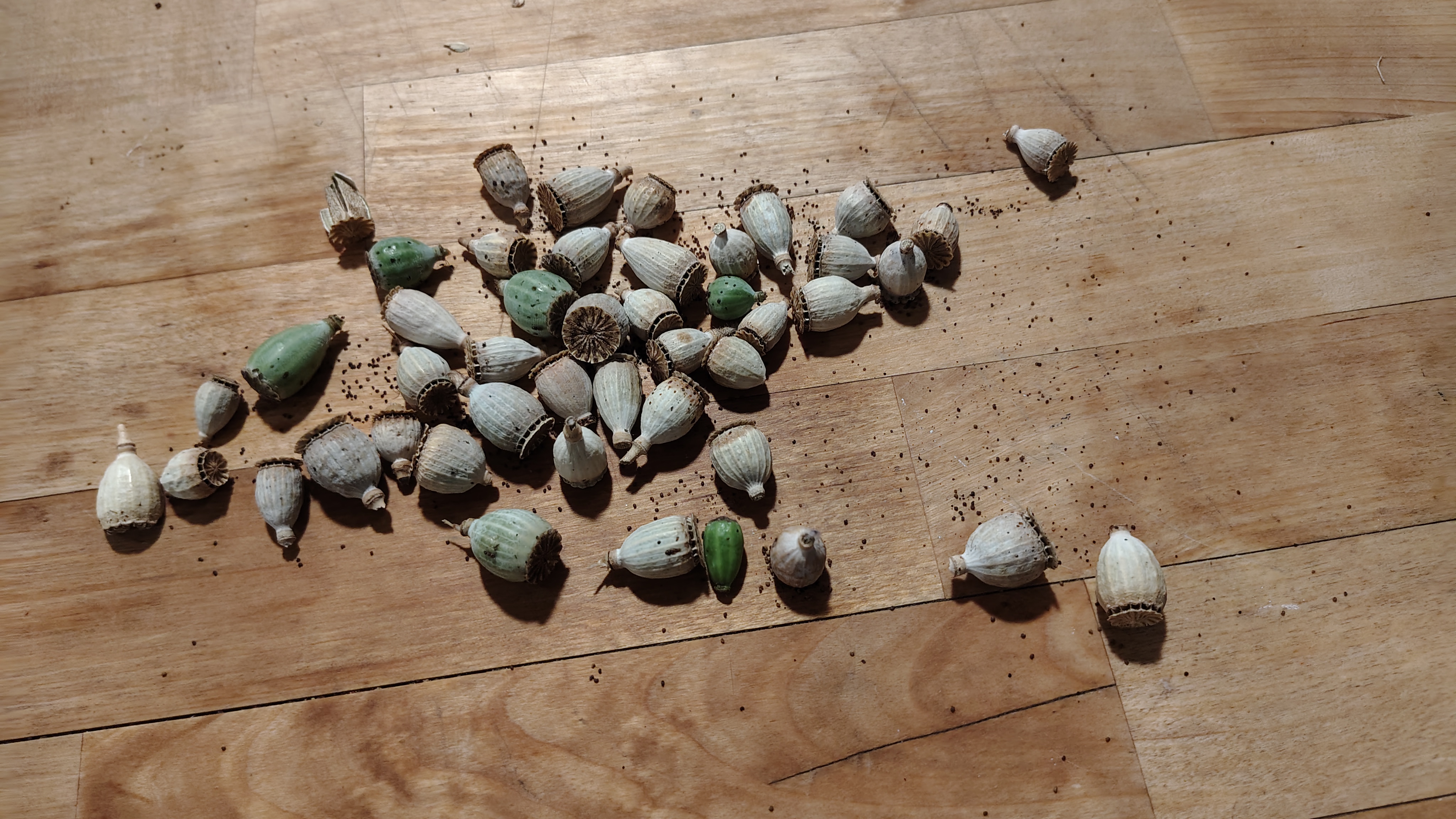
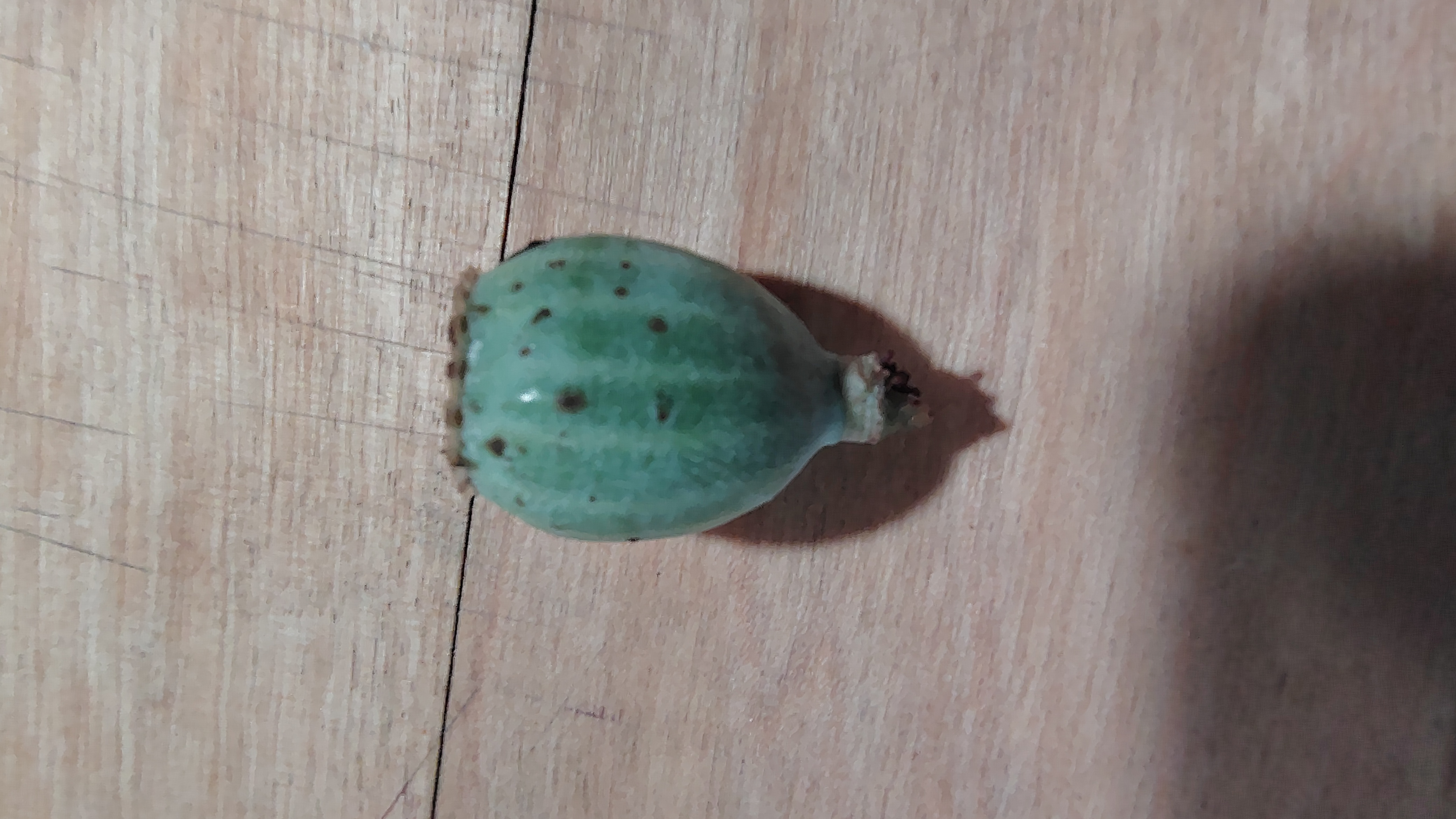
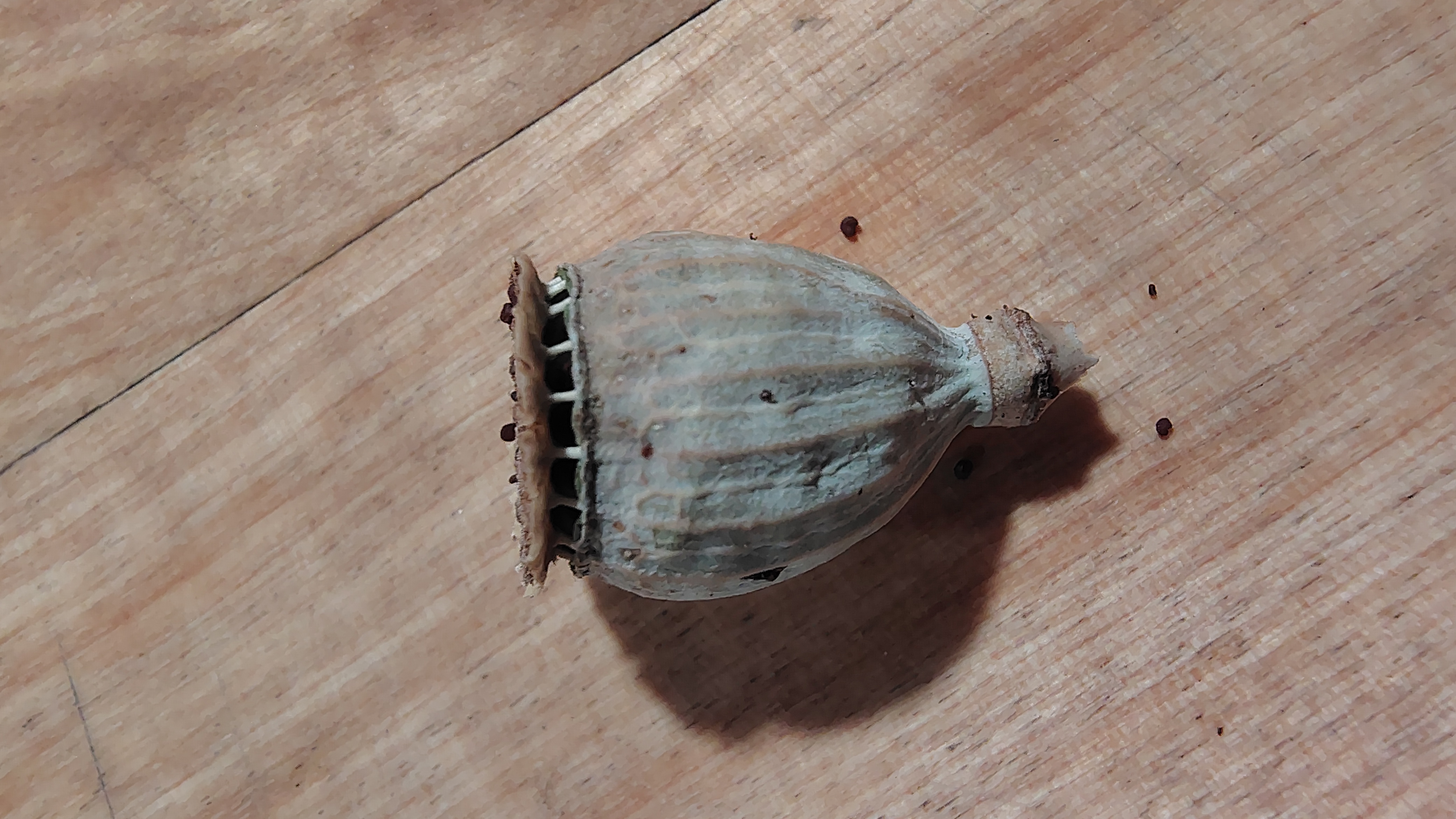
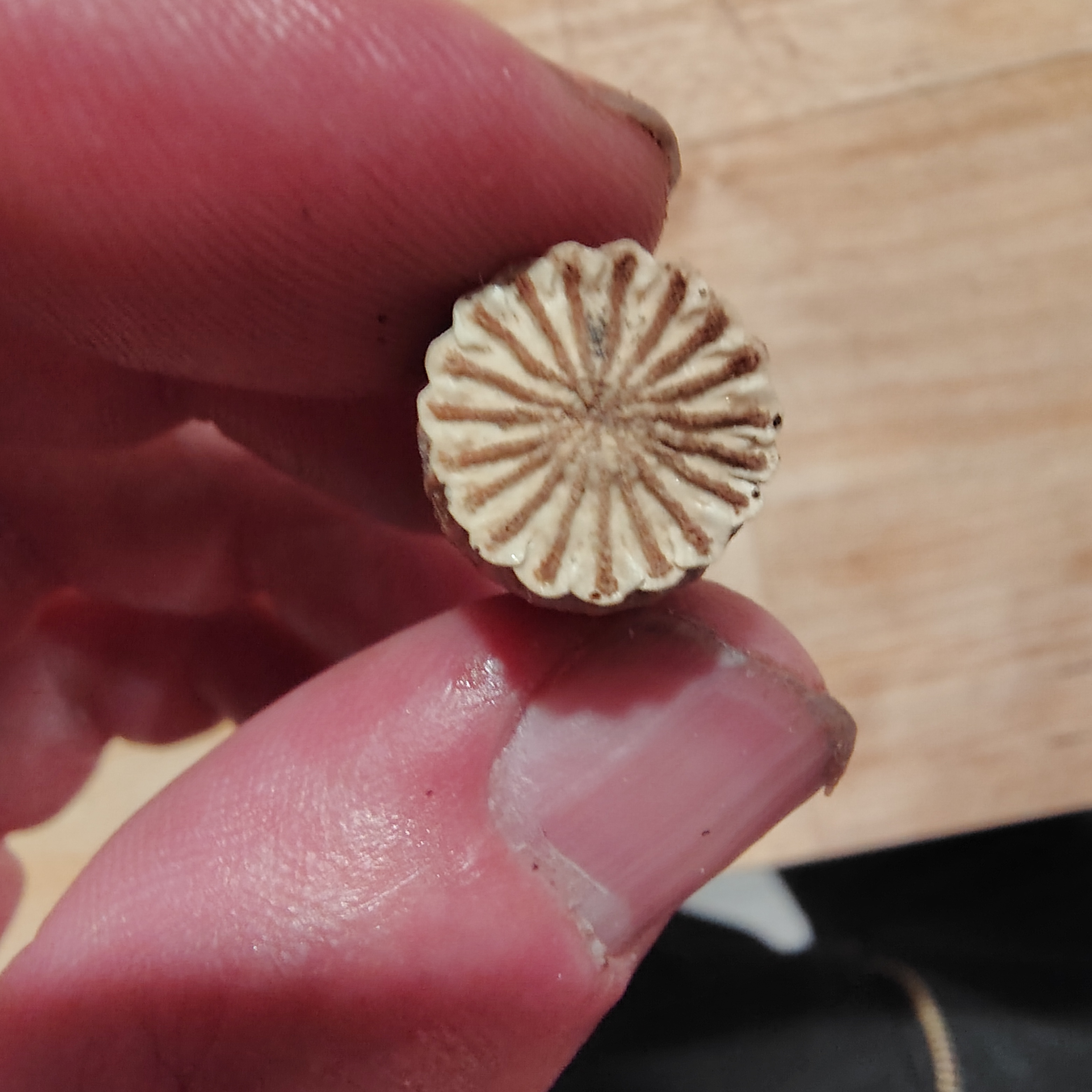
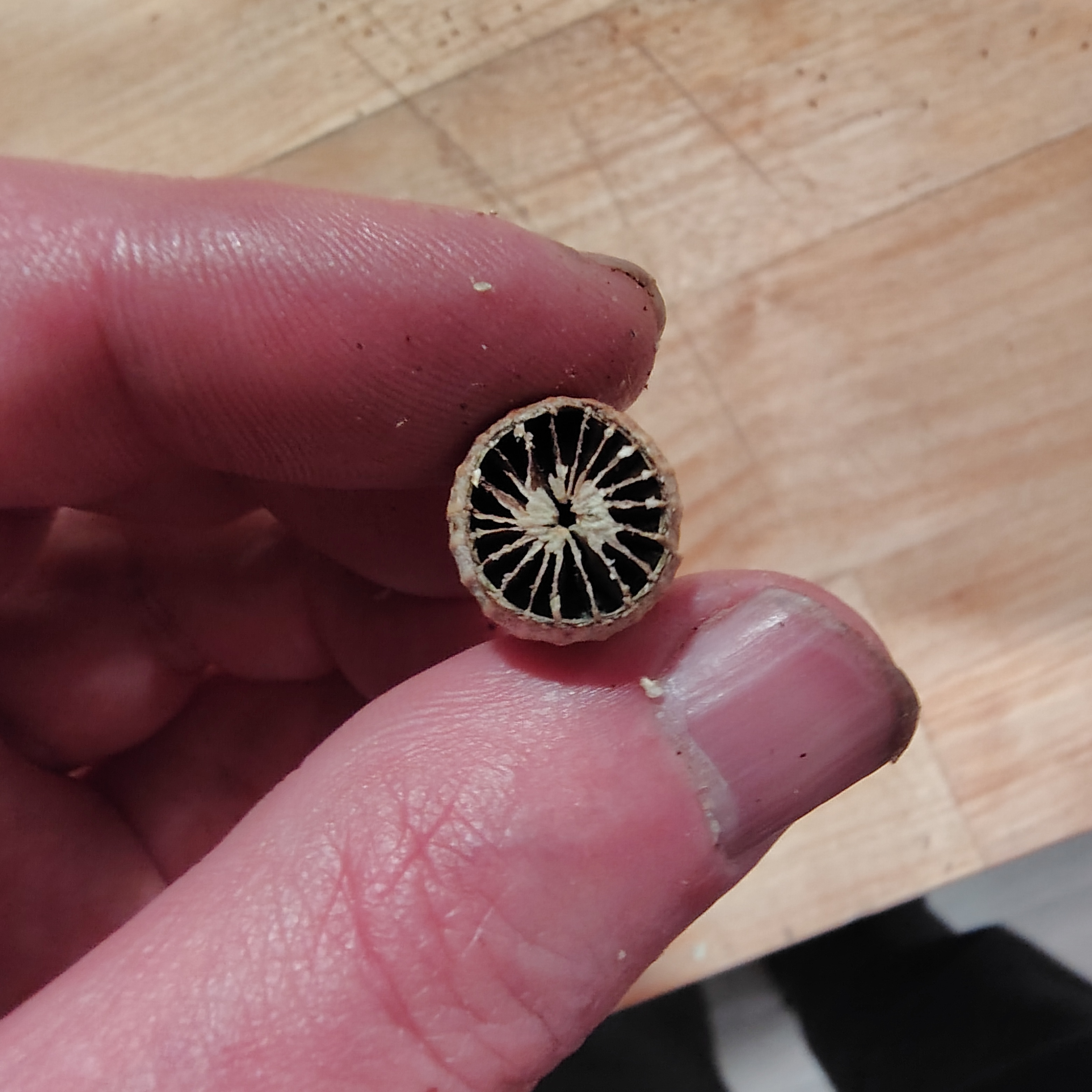
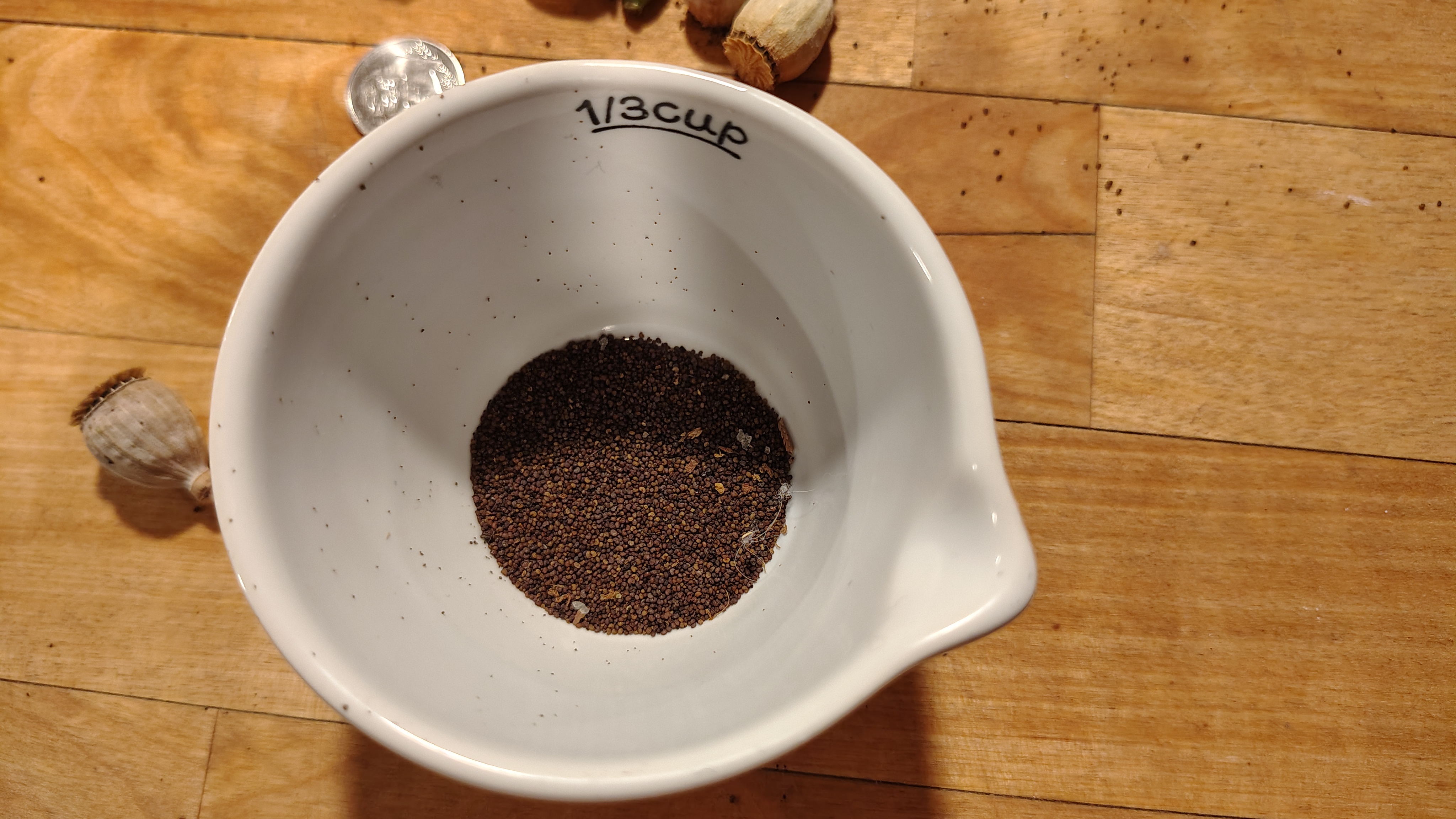
The poppy is a flower that I have been interested in for as long as I can remember. Their magnificent, short-lived beauty, pretty green pods, and seed dispersal mechanism once fully matured has always fascinated me. Here are some photos of poppies in their different stages starting with photos of the flowers of my first successful attempt at growing poppies.
It's currently rainy season here in Mexico City, so I am growing the plant indoors in a tent. Thinking I was smarter than every gardener on the internet who said "they do not survive transplant", I successfully germinated over thirty poppy plants - and ended up with one survivor. The resistant nature of the poppy plant is an incredible thing. The germination of the plants is quite sensitive: the seeds must be cold-stratified (30 days or more in the refrigerator or colder temperatures in order to activate them for germination) and then must be planted on the surface of the soil. The soil must be kept moist 100% of the time until they germinate, and for a little while after until they establish themselves. Poppies grow a very long, thin taproot that, at the beginning of its life, is about as thick as a human hair. This is why the other plants didn't survive transplant. I had germinated them in germination trays with individual cube-shaped cups for each plant and, while I had a nearly 100% germination rate, I was unable to keep the cubes intact when pulling them out of the trays. A few of the plants survived a few days, two made it to a few weeks, and one made it to maturity.
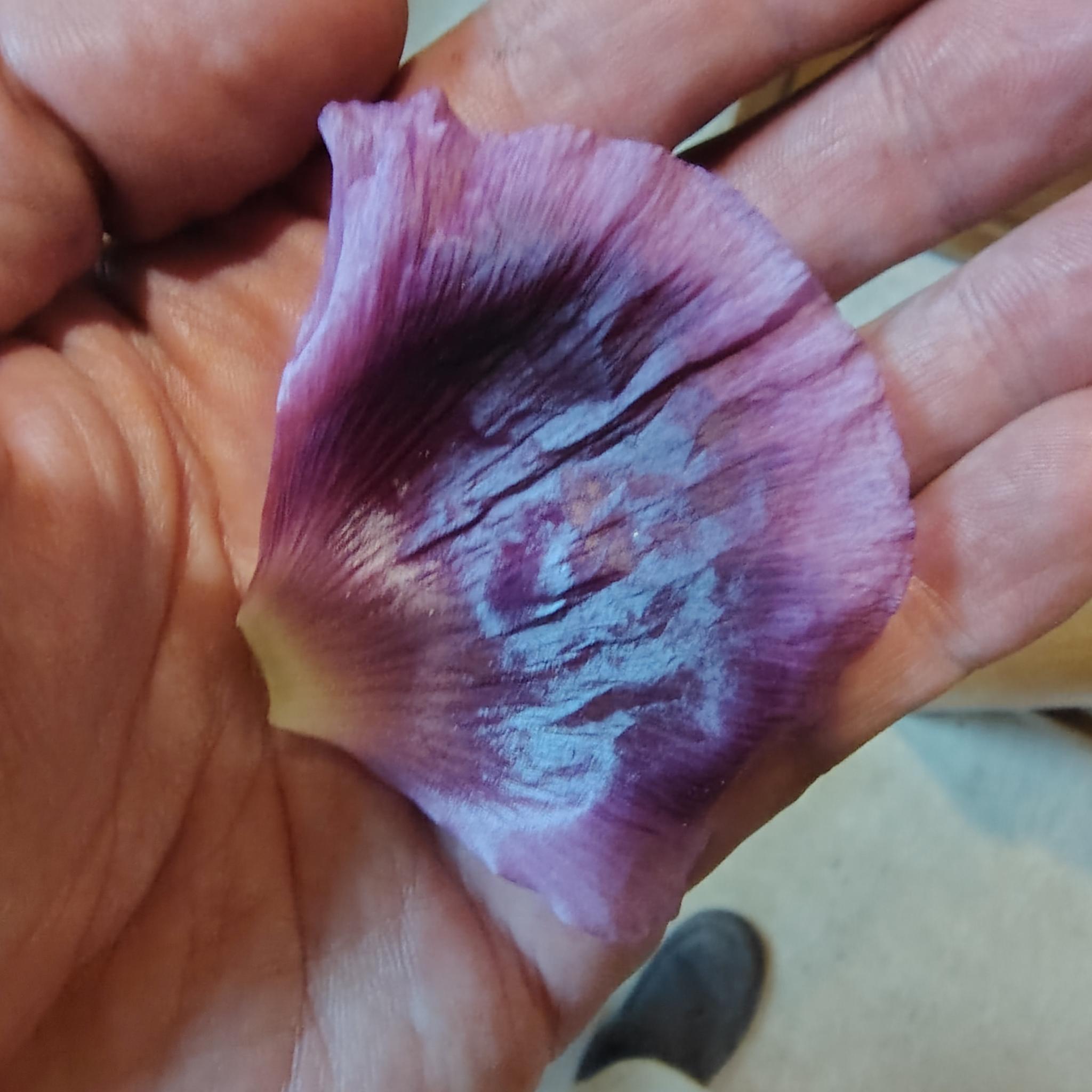
Once established, the plants are incredibly drought-resistant and can go days or weeks without watering. While the plants were in the middle of their life, I had to leave town for a couple of weeks and had my fiance care for the plants. However, the internet went out and the "intelligent" socket that I had the grow light plugged into does not store its configuration on the device itself, but rather reaches out the server over the internet for a signal to turn on and off. Since I had the light cycle at about sixteen hours per day, she didn't notice that the lights weren't turning off at night because they were turning off at midnight and then turning on at 8am. Since she was sleeping when they would have normally turned off, she never noticed that they were on 24/7 and I didn't think to ask her to check. She kept them watered and when I got back I started to control the light manually. The plant immediately became healthy again (it never really got too bad in the first place) and started developing the capsules the blooms form in. On the 29th of July, 2026, I woke up to a surprise - with the window of the grow tent open, a stunning purple that im mediately drew my attention. The next day, another. They should all open now within the next few days, their petals lasting only a two to four days and falling off, exposing the seed pod.
This seed pod is what is used to produce morphine, codeine, thebaine, papaverine, and a number of other alkaloids that have both medical and recreational use. Let's keep the word "illicit" out of our vocabulary, it will not be used in the context of controlled substances on this blog because I believe that one should be able to modify their brain chemistry in the way they see fit, as long as it doesn't hurt other people. If a home grower were to begin to harvest the latex from the pod, it stops being a decorative plant with delicious seeds for use in baking and suddenly becomes a federal felony. Don't score your pods and harvest the latex, it's not worth it. The whole plant contains alkalkoids anyway, and you would theoretically get a much better yield processing the poppy straw (the whole plant) to make poppy putty. I won't get into the details because I do not condone illegal activity, though I am entirely for the reform of drug policy and the freedom of choice to use or not use this highly addictive plant for the medical uses for which it has been cultivated for millenia.
The variety of the blooms pictured below is called "Double Black" or "Black Peony" depending on the purveyor of seeds. The seeds came from Eden Brothers Seeds, who have truly unbelieveable catalogue of seeds for all sorts of flowers. I can highly recommend them and would recommend that anyone interested in poppy cultivation check them out, as they have not only an incredible selection but a wealth of information regarding the cultivation and care of the different seeds and plants they have available.
Without further ado, the photos.
#+NAME: fig:seedsincup